Extra Credit: Bradbury Building & Grand Central Market

GRAND CENTRAL MARKET: FALAFEL SANDWICH

I decided to go out and take a trip to the Grand Central Market and the Bradbury Building for extra credit. I went Saturday February 29th before work, and I brought along the rest of my family.

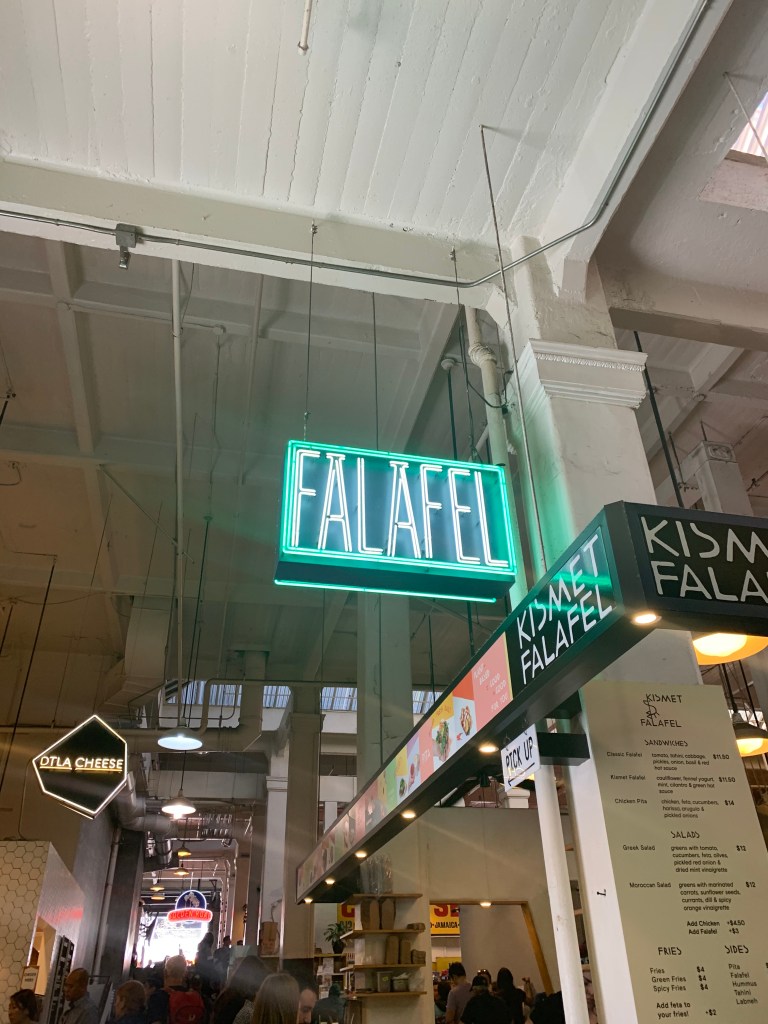
The market itself was very colorful and lively. I really enjoyed walking around and looking at all the different food options (which made it really hard to decide on what to eat). It was also quite packed for a Saturday morning and there was already long lines for certain food bars. The market was not what I expected, I thought it was going to be more vegetable or fruit stands. Instead it was a lot of over-priced (but good) “hipster” food. The scenery, again, was very aesthetically nice and colorful. The setting felt like I was transported into an underground food space even though the market is still above ground. I think it gave me that feeling because the market itself looks like it is in a giant warehouse. However, I think my favorite part of the market place’s design was the neon signs; almost all of the food places had a big neon sign. Walking in, the first thing I saw was a big wall covered in bright neon signs (the first picture). I really like the design of neon signs, I even have a small neon cactus at home too, so I was happy to see so many pretty neon signs.

Despite the endless amount of food options, I decided to settle on a falafel sandwich. My mother and one of my sisters also decided to try something from the falafel place, but since they both eat meat, they decided to get a chicken sandwich instead of a falafel sandwich. My other sister decided to get some pizza from the pizza food stand right across from the falafel stand.

The food was great, especially the falafel. I usually eat falafel from OPA! Greek back on campus but the falafel from here was a lot better. It was served on pita bread buns, which added a delicious and distinct taste compared to sandwiches made from regular bread. The falafel itself was also very good; the spices it had made it taste a lot richer and fresher compared to other falafels I have tried before. Although it is “over-priced hipster food” I think the sandwich was worth it.

The rest of my family also enjoyed the food so much that my mom wants to come back to the Grand Central Market sometime to eat again. Next time I hope to try some other foods as well, but overall I really enjoyed being in the market.

T H E B R A D B U R Y B U I L D I N G
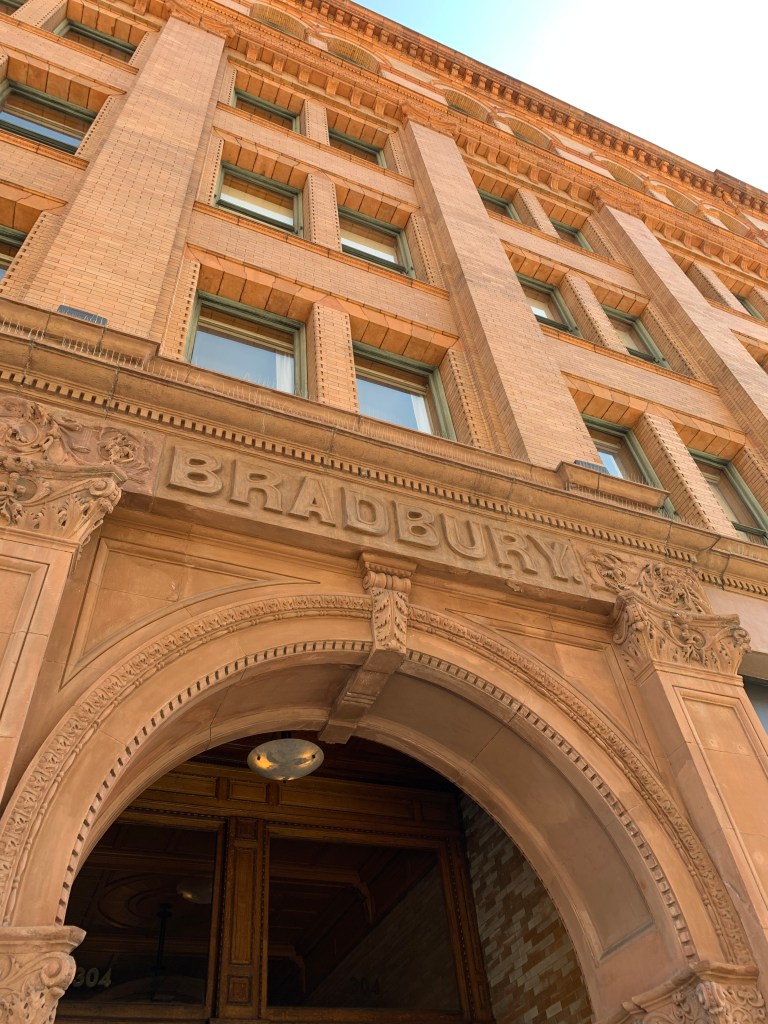
After eating at the Grand Central Market, I crossed the street and went to the Bradbury Building. It was definitely a lot smaller inside then I had expected but the architecture and interior design of the building was stunning. I really enjoy the style of the older buildings, especially those in downtown LA.

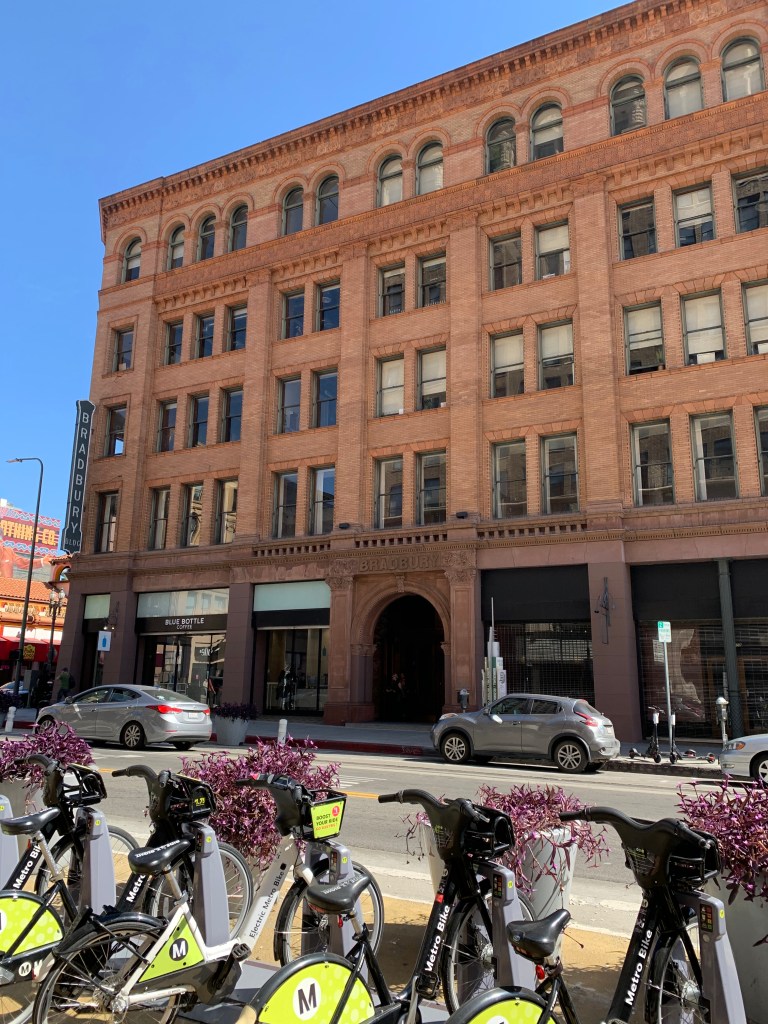
The first thing I noticed at the Bradbury was the entrance to the building. I entered from the main door facing the Grand Central Market (as shown in the first and second picture). I really admired the design of the arched entryway and the detailed pattern that was cut into the outer fame of the arch. I also enjoy how the architecture of older buildings typically have huge entrances and spaces between the doorway and the sidewalk.

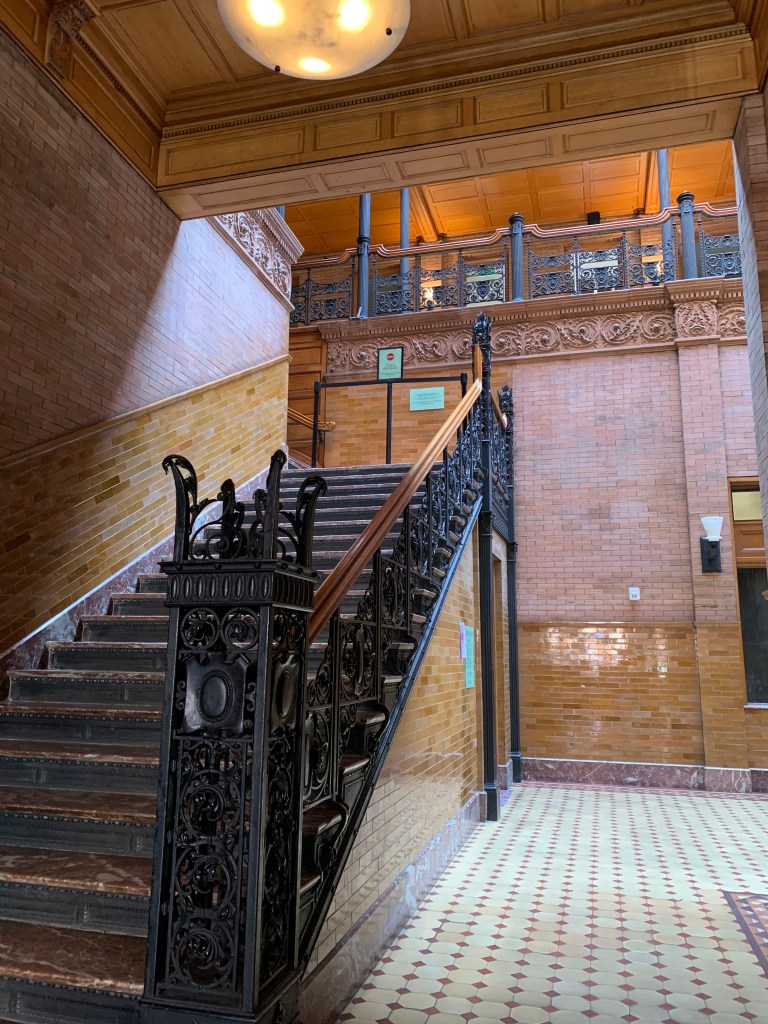
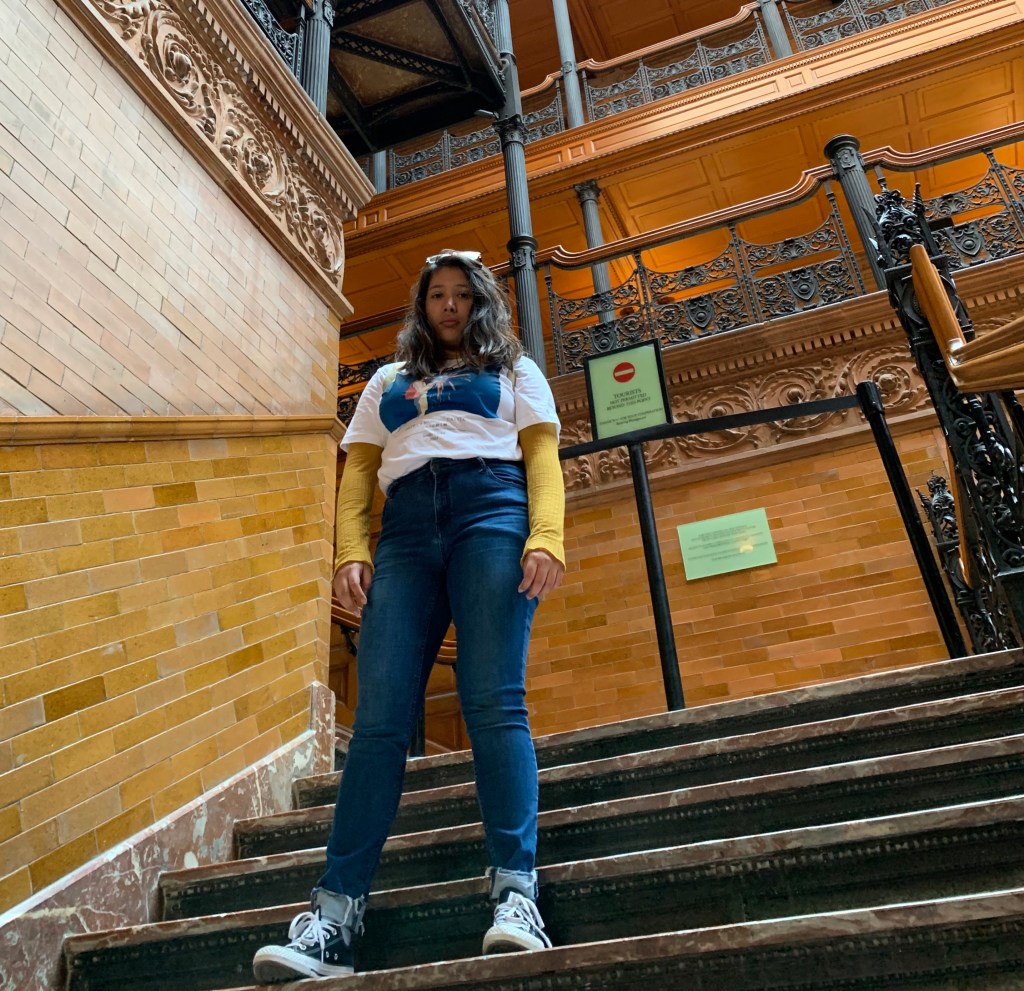
Once I walked in, the first thing I saw was the main staircases and their very detailed ironwork designs. All the intricate details made the stair rails look very pretty along with the wood frame and brick both contrasting the ironwork.

I was really fascinated by the elevators. Again, the patterns/designs on them were really pretty and made the building design stand out. All ironwork also contrasted very well with the color of the rest of the building. The dark color of the iron was able to contrast very well with the lighter tones of the brick and the wood of the building, making it overall, visually appealing. The open sky atrium also created a nice setting for the building, I believe the natural light coming from outside during the day effectively finished the building’s aesthetic and “vintage” atmosphere instead of just renovating it with modern electrical lights (even walking in almost felt like walking into a different time period).

I really enjoyed visiting the building, and I really admired both are architectural design of the building as well as its smaller details. If I have a chance, I would go back to visit again so I can fully enjoy the building and not have to worry about taking pictures.

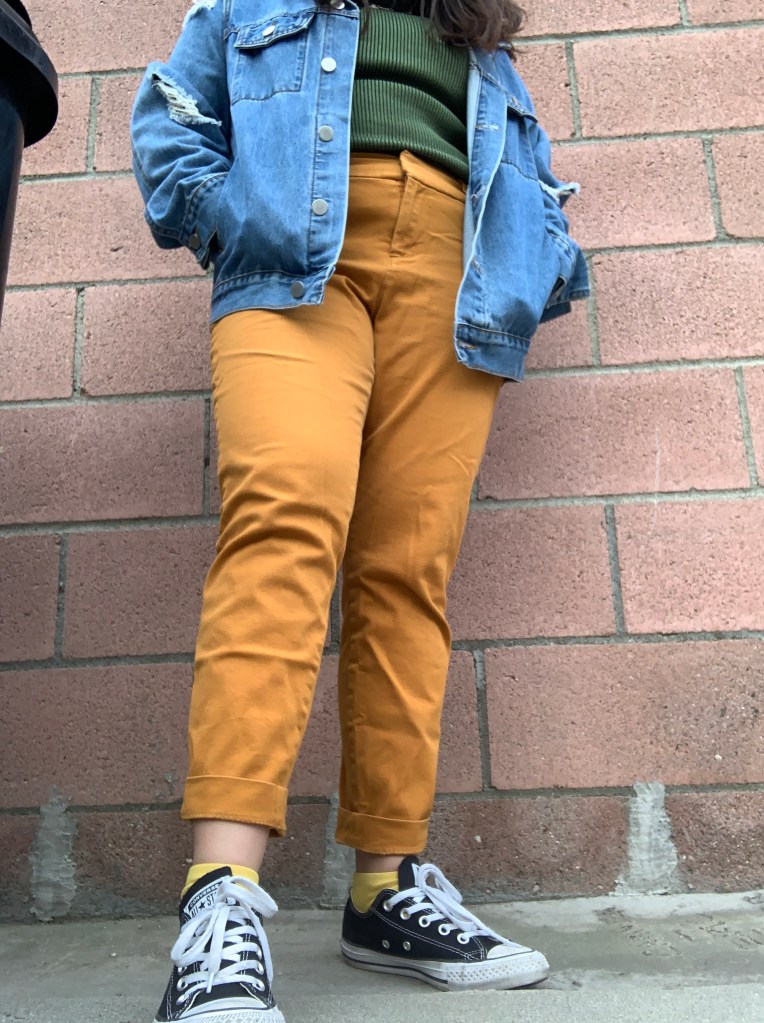
Wk7: Counterfactual Identity

[before & after photos]

Describe what you tried to do

I am a rather anxious person, so naturally an activity like this would cause me to be very nervous. To solve this, I asked a friend to accompany me as I ask a few people what they thought my major and my name is. I approached several people in the Starbucks library and quickly asked if they would answer just two questions for my class assignment. Along the way my friend would also makes some interesting comments about what the participants responded with. 

As far as picking my outfit, I had a bit of difficulty choosing what to wear. I found this hard because for me, if I do not like what I am wearing I feel very uncomfortable. I was worried that I would not be able to find an outfit that is both different and keeps me comfortable. So, my solution was to wear a style I love, but never really tried to wear normally out in public. I started with my mustard yellow pants; I love these pants but before today I have only worn them out once. Based on my outfits from my favorite YouTube channel called “Best Dressed,” I ended up with the outfit I wore in the photo. Since this activity was wear something different and wear something that is a “fabricated identity” I took the opportunity to wear something I have been wanting to wear but never had the motivation to do. The main article of clothing I am referring to is my pants. I usually wear black or blue jeans and I have never really felt comfortable to experiment with colored pants even though I enjoy the aesthetic of colored or pattern pants.  

What were their reactions to you? What did they think your name was? Your major? Did you find them responding to you differently than people ordinarily do?

After asking the participants the two questions, most of them did not answer right away, and instead took a couple seconds to study my outfit. None of them seemed bothered, I think the participants were okay with the assignment because it was only two questions that they had to answer. (What do my think my major is?) Most of the participants thought my major was Art. I figured this would be a popular answer since my outfit followed a “modern-day aesthetic color palette,” and those colors stereotypically are pastels, mustard yellow, and/or olive/moss green. I also wore hair barrettes that matched the colors of my outfit and typically people believe only artists pay attention to little details such as color coordination of accessories. However, I was surprised when one person suggested that I was an English major. (What do you think my name is?) Some of the names I got from people included Angie, Leslie, Jessica, and a couple “Samathas.” Jessica was paired with “an English major.

This activity was different because typically people don’t consciously try to guess ones major based on what he/she/they are wearing. Most of the time, people ask “what is your major” instead of trying to assume based on outfit choices. Although as humans we constantly make assumptions about a person based on appearance, questions such as “what is your name” and “what is your major” are not common conscious assumptions we make about people. Instead we just ask those questions because the other person is able to answer. There are some exceptions, such as when people say “oh, you look like a (name).”

Your conclusions about the experience?

Although my outfit choice was not a major change in my normal style, this activity prompted me to wear something I have been wanting to experience with (such as the colored pants). As far as the participants’ reaction, I had already anticipated that people would assume that I was an art major. Stereotypically, art majors dress with a more “vintage” or “aesthetic” style compared to just plain jeans and a T-shirt. I believe this is a common stereotype because artists tend to express themselves creatively through many different kinds of media. I also strongly believe that fashion/style is also a form of creative expression. So, most people who also believe clothing are a form of creative expression might expect artists to also show their creativity through their own clothing, even though that is not always the case. I did not have any expectations for the names, but I did find it humorous that when I put on my outfit in the morning I have expected someone to name me Samantha, and coincidentally both a participant and my friend said I did look like a Samantha. 

Wk6: Shocking Art

Why did you choose this idea?

I chose this idea because it was a recent event that really impacted me. Unfortunately, in our culture, “cancel culture” is really common; especially among celebrities or influencers. My project is a tribute to music group Monsta X’s member Wonho who was accused back in October 2019 of smoking and owing people money from before 2015. Although these were all rumors coming from no evidence and from 2 unreliable sources (who are in fact known for creating false rumors), the public/media quickly turned against him. Even his own company terminated his contract with his group and was pronounced a former member of Monsta X. It’s been about 4 months; he hasn’t been heard from and his former company Starship Ent. still refuses to speak about the issue; however, fans are still very vocal about this unfair treatment. I picked this topic because I still refuse the accept the injustices Wonho has faced and I truly believe cancel culture is toxic. Throughout these years, he has visibly grown and matured into a better person who always puts others before him. He has clearly displayed moral growth and has truly shown what it is like to learn from past mistakes (he was only about 21 when this whole issue people claimed happened). Despite his growth, people still refuse to allow him to prove his innocence, but still hope that his name gets cleared.

What did you hope to communicate?

I hope to communicate how participating in “cancel culture” is toxic to our society and can sometimes result in ruining an innocent person’s life. This type of reaction also does not allow the accused person to really “come back” from these sort of accusations. Even after apologizing and being proved innocent, celebrities often never have these issues removed from their lives. People always remind them of past mistakes.  I believe that in certain situations, society should forgive them; the general public often forget that those same celebrities/influencers are still also humans that make mistakes, and also often forget how certain mistakes should be forgiven. Cancel culture just creates an atmosphere where people believe someone can never redeem themselves and learn from past mistakes. Although some offences are too severe to receive forgiveness, people should not live in fear that they can never mature and grow morally. Most importantly I focused on communicating and portraying a common ideal that “cancel culture” holds, which is “guilty until proven innocent.”

How successful do you think you were?

I think I was pretty successful in conveying my message because I created this piece while I was feeling raw emotions towards this specific situation. I didn’t just want to sit down and outline what I wanted to draw or write like how I normally do when I want to create something. Instead I waited until I was “inspired” to create a piece that would truly reflect what I was feeling during that moment. 

What would you do different if you did it again?

I really liked how it came out because it was “spontaneous,” and I did not focus on how the final result would look like but more on the massage I wanted to convey through my piece. So, I don’t think I would change any part of my drawing, except maybe I would use a bigger sheet of paper.

What is another idea you might explore through “shocking art”?

Another idea I would like to explore through shocking art is maybe environmental issues. Before I had the idea of making shocking art on “cancel culture” I wanted to experiment with shocking art dealing with environmental issues, such as deforestation. I was originally going to display a “burning” tree by using a lighter and then photoshop a picture I would have taken of a tree near my house. However, I am satisfied with my final decision to focus on “cancel culture.”

Wk5: Storytelling (Photography)

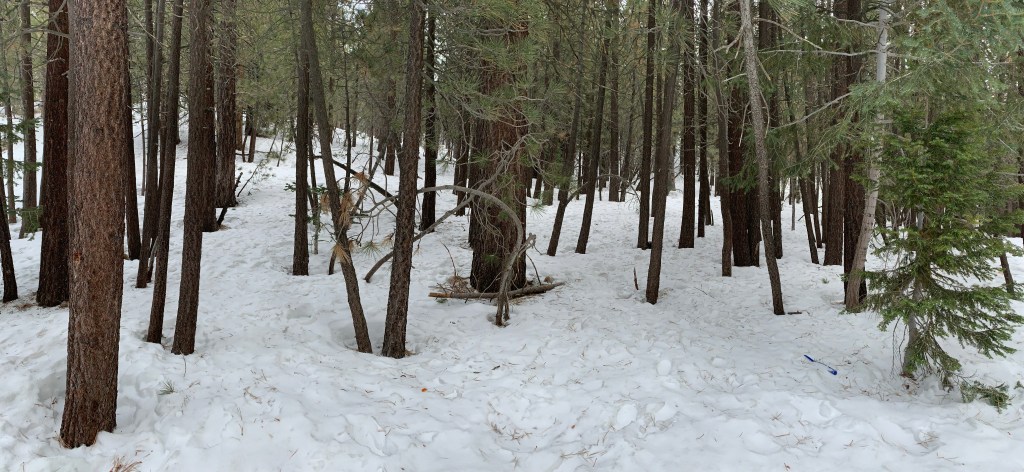
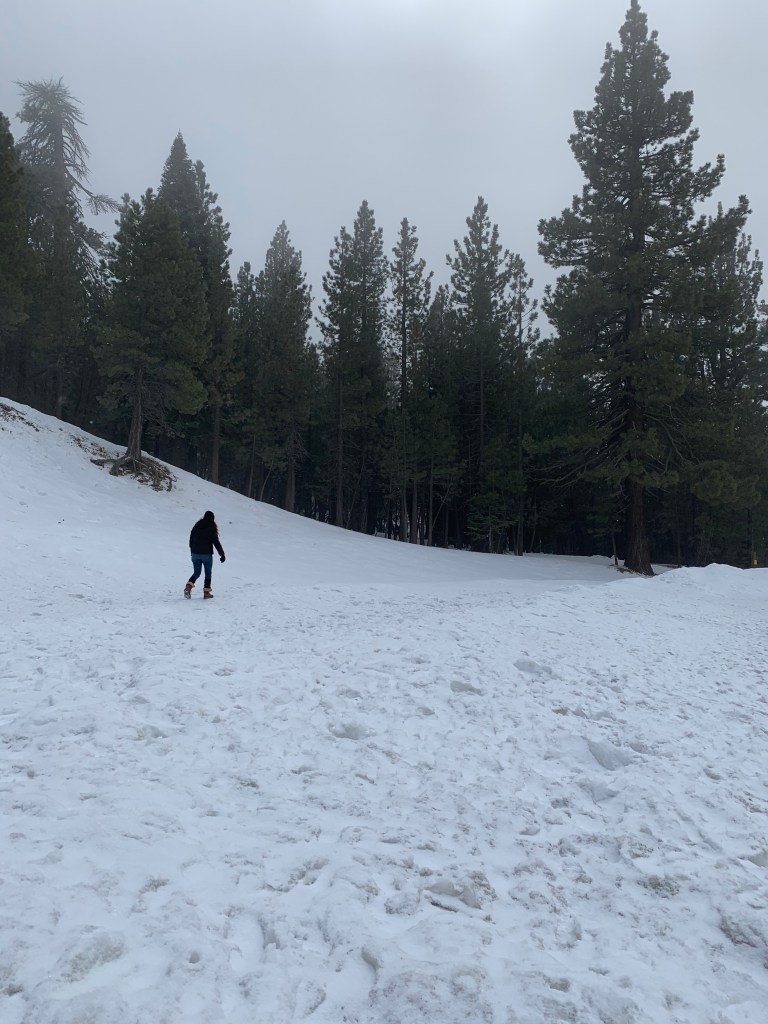
1:25PM Saturday, Mt Pinos. Old snow has collected on the floor and around the foot of trees; the footprints show that other people have been there earlier throughout the day.

11am Saturday ,February 22nd, Downey. Started the morning with some Starbucks coffee and a bagel to eat on the way to the mountains. I would have to make it last a 2 hour drive.

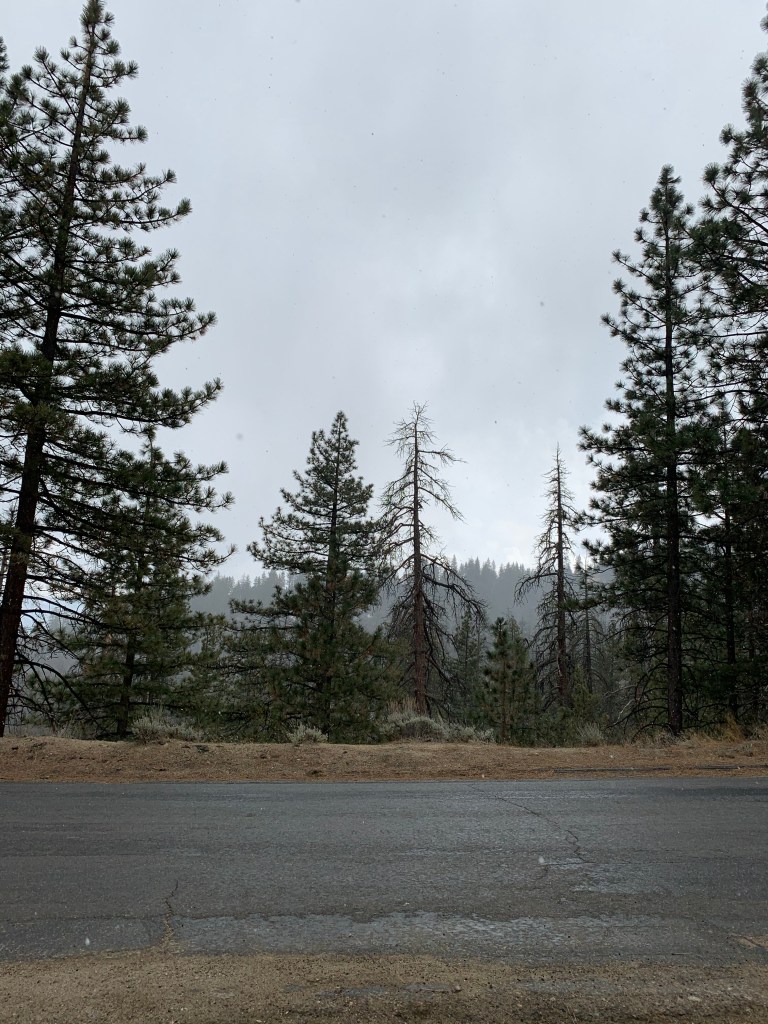
12:05PM Saturday February 22nd. On the road, more fluffy clouds started to move in. They got thicker as we got closer to the mountain as a sign of rain. At the time I hoped we would catch some fresh snow once we got to the destination.

12:59 Saturday, February 22nd, nearing the top of Mt. Pinos. During this time it began to rain; allowing it to begin to snow. However there was still no snow on the ground and I was worried that there would be no snow at all.
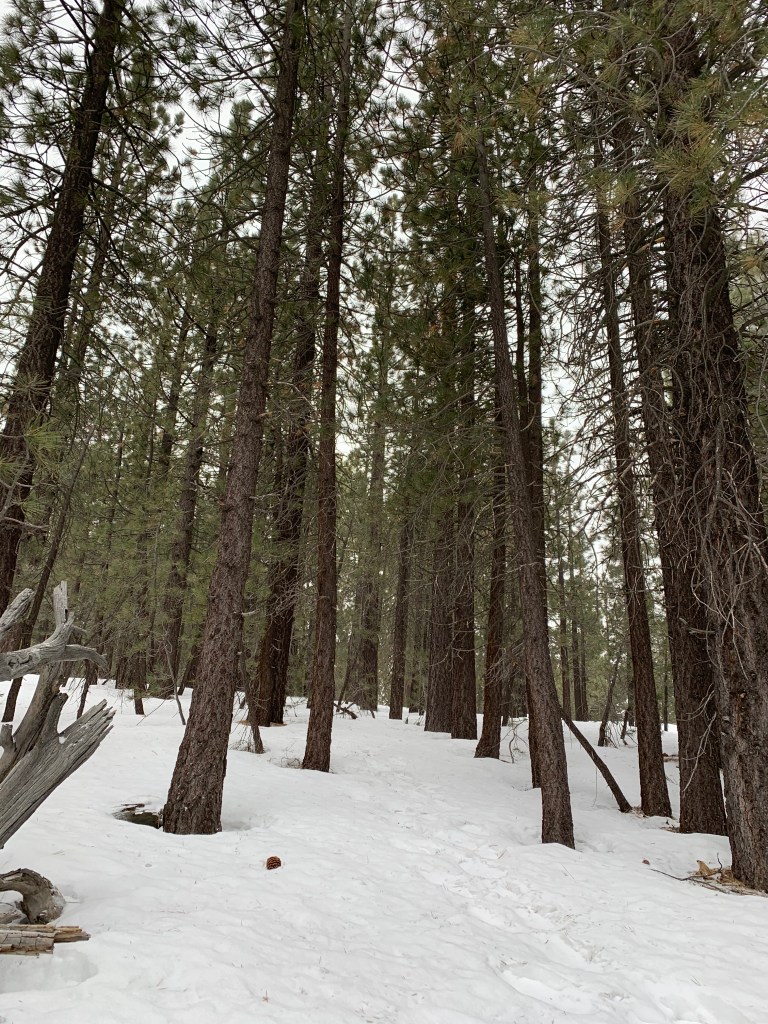
2PM, Saturday February 22nd, Mt. Pinos. We arrived at the designated spot near the top of the mountain at around 1:20pm. Once I got off the car and walked around for a little, I decided to take this photo of the trees around the open areas of the forest.

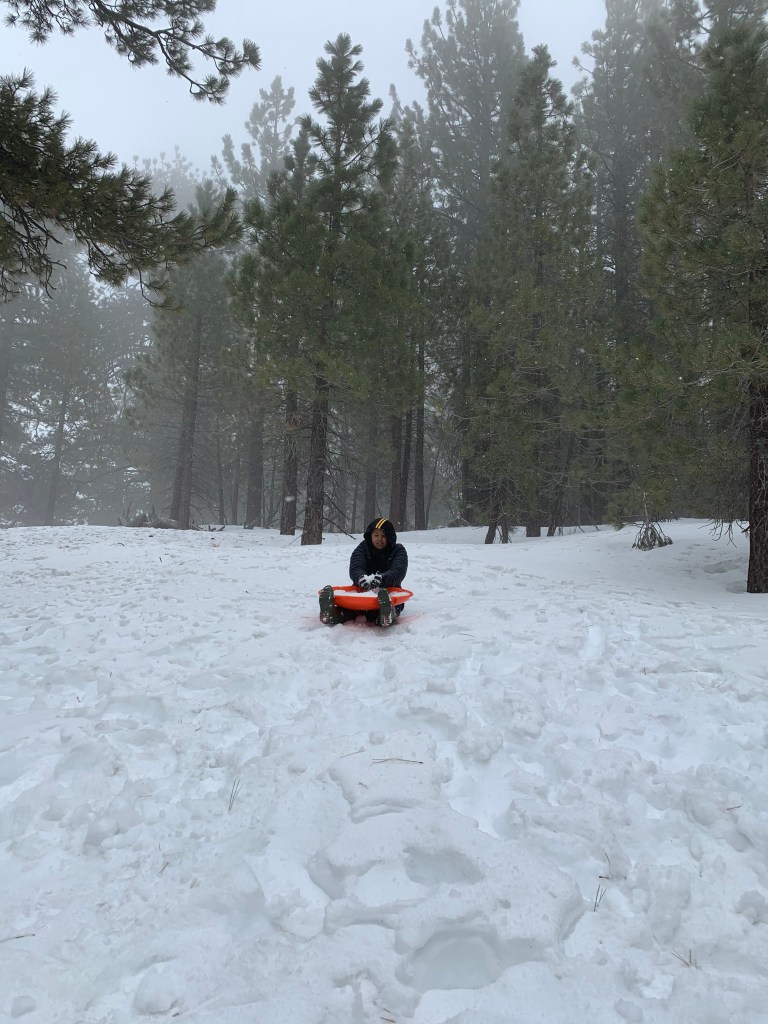
1:22pm-2:25pm Saturday February 22nd, Mt. Pinos. We quickly found open areas around the trees and the rest of the forest. My sister (the first two pictures) was extra excited about throwing snow. Since it had just snowed a bit on the way up, the snow was very soft in that specific area. Picture 3: We walked around to find a good spot with some soft snow.

3:23pm Saturday February 22nd, Mt. Pinos (view from inside the car covered by the snow). By 3PM tit was snowing again, but this time it was heavier; the car ended up being covered. Since the snow fall started getting heavier, we decided to go back down the mountain before it would make it too hard to drive back down.

Why did you choose this story?

I chose this story because I really like the cold weather, and as someone living in LA, I don’t get to experience “real” cold weather like with the snow in the mountains. Fortunately, my family was making a trip to the snow this past weekend, so I decided to document the trip through photos for this photo-story.

How do you think you did?

I feel like I did an “okay” job; it was pretty difficult to take better photos when my hands were freezing after I would have to take off my gloves to use my phone. I really did enjoy certain pictures I took while at the mountain, but I could have gotten better quality photos if I had gloves that worked with touch-screen phones. 

Which image do you think is the individually “best” image in your story? 

I think the best image in my story is either the image of the trees by themselves in the snow (5th image down), or the picture of my sister playing in the snow (image 1&2 in the cluster of photos). Both really encompass the trip as a whole; the trees show how I see winter (and snow) as very beautiful aspects of nature, while the one of my sister shows how I made the trip with the rest of family instead of alone. 

Does your photostory contain an image that you think is not, by itself, a “great” image, but that is nonetheless important because it helps to tell your story?

I believe that the Starbucks picture was not a great picture; however, I believed that I needed a picture that would describe how my day started differently instead of just using another picture of mountains or of the sky and say “I woke up and headed out to the mountains.” I feel it creates a distinct beginning to the story since it is the only picture that does not follow the theme of “forests” like the rest of the photos do.

What would you do different next time?

Next time I would plan ahead to remind myself that I want to document certain parts of a trip. Sometimes I would forget that I had to take some pictures of my trip, so then that would also make the pictures feel forced if I need to keep reminding myself. So, next time I will be more prepared to take lots of pictures that do not feel forced and that fit my story.

Are there other Photo-Stories you might like to tell?

I would really love to tell a photo-story of a concert. I definitely could because of all the pictures I already have of me going to concerts but I could not reuse photos for this assignment. Since my closest concert date is not until May, I settled with a snow trip photo-story. 

Artist Conversation #1

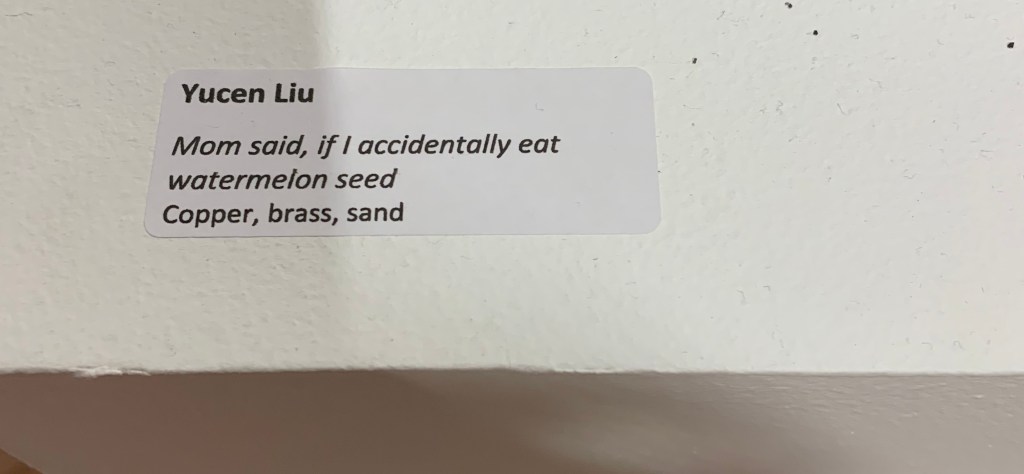
Artist: Yucen Liu (3rd year Graduate MFA)
Exhibition: Metal Group Show
Media: Copper, Brass, Sand
Gallery: CSULB School of Art; MFA 3D Media (Fiber, Metal, Wood)

Yucen Liu is 3rd year graduate student from the CSULB School of Art program with a focus on 3D media metal art. She stated that she is working towards her MFA. The work that Liu presented was a little metal bear that had a plant growing out the top of its head. During her explanation of her work titled “Mom said, if I accidentally eat watermelon seed” Liu said that much of her work reflects the stuffed animals from her childhood. She stated that she is an only child, so her parents would give her stuffed animals to keep her company. Liu said that most of her other works are part of a collection of metal animals that tell stories from her childhood. Her work also reflects her family; she stated that coming out to California to study has caused her to miss her family. She said that those stuffed animals that her parents gave to her represent the love and companionship from her family as well. Each piece of her work reflects on childhood memories that she misses when she was back home spending time with her family.

The little bear was very detailed. The “fur” of the bear consisted of jagged lines showing an illusion of real bear fur. Those detailed lines contrasted well with the smooth nose and ears of the bear. The leaves of the plant grow out of the bear’s head, along with a few flowers. The leaves are also very detailed, and resemble real leaves of a plant. They have a slight curl to them, as well as jagged ends that emphasize their natural aesthetic. Both the bear and the leaves of the plant are made out of copper but the flowers are made out of brass, and that adds a lighter tone to them which makes them stand out. The copper gives the bear and the leaves a brown shiny tone to them while the flowers have a lighter golden brown tone to them. The piece itself focuses on the use of metals, and it follows a “metal-colored pallet” (brown/golden brown colors). The only part of the piece that is different from the rest of the media used, is the black sand that sits around the bear. The black sand is still part of the whole piece because it represents soil or dirt around the bear, as if the bear is buried with only the head and the plant visible. The size of the piece is about medium size, it is not too big that it overtakes the whole room, but it is not so small that you have to squint to see it. The piece is at a perfect size where it is big enough for the viewer to see all the intricate details of the bear and the plant.

One question that Liu answered was “Why did you choose the bear [as the main focus]?” Liu responded that the bear represented how her parents gave her stuffed animals as a child to keep her company since she was an only child. The bear also represented a story/memory from her childhood. (Each of her works represent the stuffed animals she grew up with and her childhood memories). Liu was asked what idea she was trying to explore or express with her piece. She responded by saying that she wanted to share a story/memory from her childhood with others. The piece titled “Mom said, if I accidentally eat watermelon seed” explores a common story parents tell their children that states that if you swallow watermelon seeds, a watermelon will grow inside of you. It is a common story parents share in hopes of teaching their kids to avoid eating things they are not supposed to eat. Liu said that she hopes that others can relate to these stories from her childhood and find commonality and nostalgic memories in her work.

Right away, this piece caught my attention because of the story it tells. From reading the title, I related to the story because my parents would also tell me that if I ate watermelon seeds, a watermelon would grow inside of me. Besides being very beautiful and detailed, the piece also does a good job of resonating with people’s memories. Even if someone’s parents did not tell them that story, I feel that people would still be able to related because everyone has some weird stories that parents tell them as a child. Liu had said that she hopes people can relate to the childhood stories her animals tell, and I feel her pieces do a great job of sharing that childhood commonality.

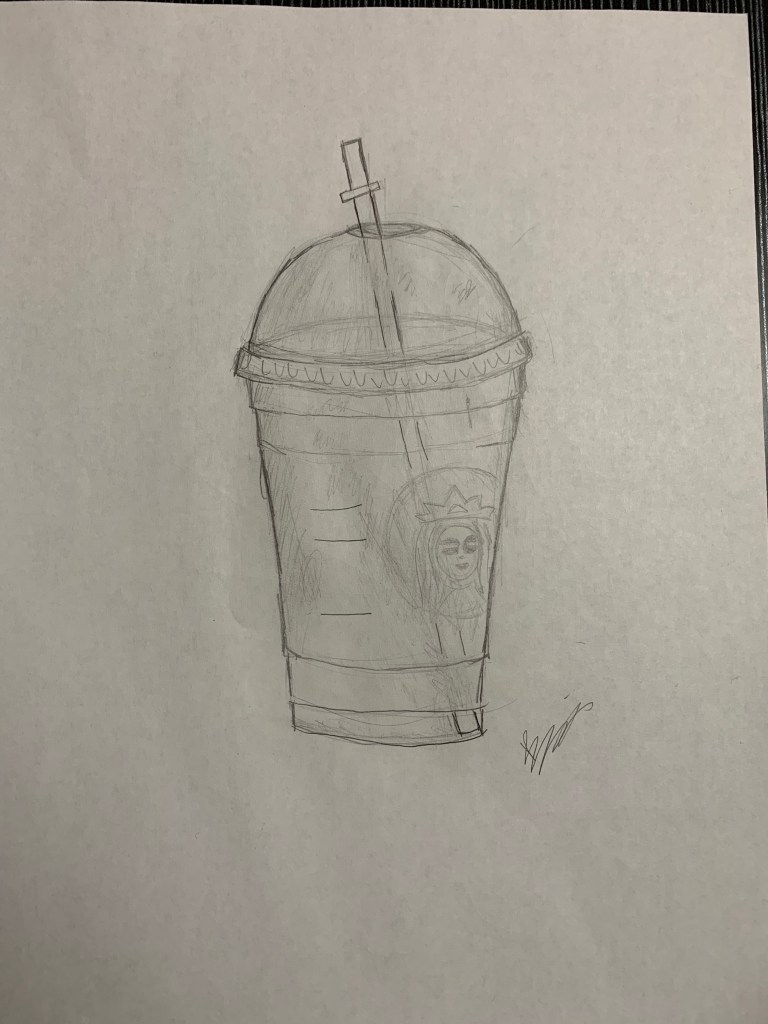
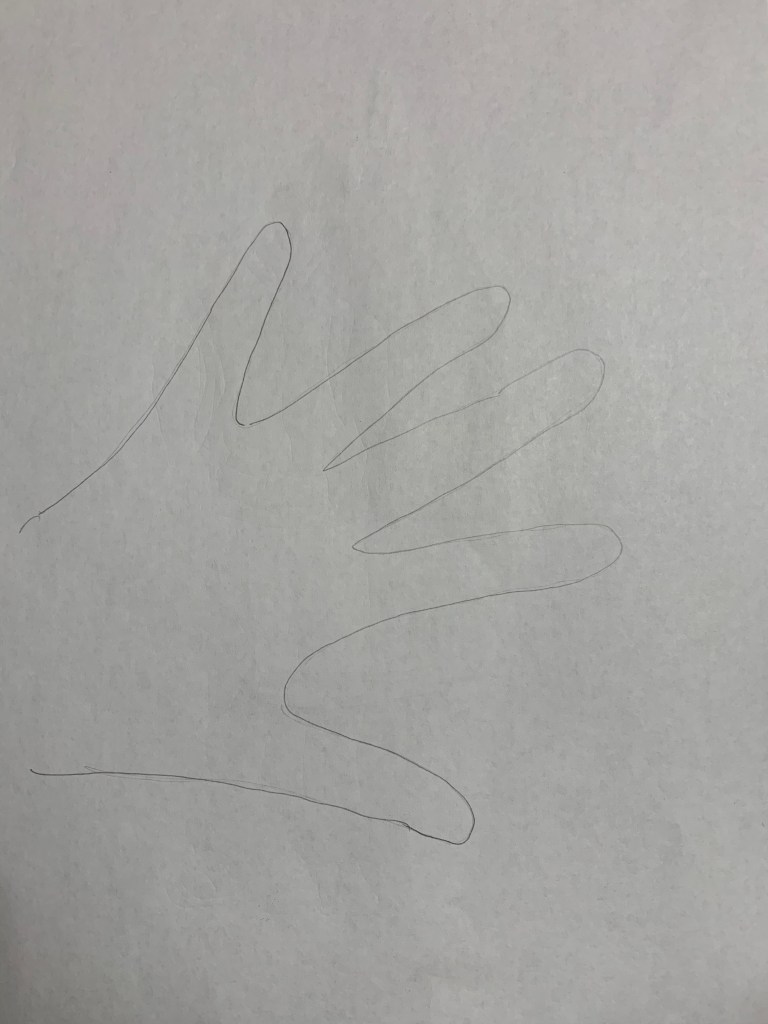
Wk4:Drinking and Drawing

Was it fun? Was it frustrating? Do you like to draw? Will you ever try again?

It was not as frustrating as I thought it would be. I usually prefer to draw things other than trees or cups so, I had assumed that drawing those thing would frustrate me. It was not extremely fun, but it was definitely a little bit relaxing when I wasn’t struggling to find something to draw. I like to draw a lot during my free time, or whenever I have a new idea to draw, so this assignment was pretty simple besides the fact that I had to draw things I usually wouldn’t draw. Personally, I would never draw things like cups again because I prefer to draw other things, but it was fun to just sit outside and look for something to draw at school. I will, however, continue to draw things I like during my free time.

Do you think if you practiced for 100 hours, or 1,000, that you would get a lot better?

Yes, I do believe that if I were to practice drawing for hours, I would get better. I’ve been drawing for years and throughout those years I am able to see the progress I have made with my drawing style and quality of work. All that progress was because of the time I put into learning how to better my drawings—so yes, 1000 hours of practice helps. 

What is your major? Can you think of any ways that simple sketching of some kind could be useful in your major?

My major is Communication Studies, but I hope to minor in Graphic Design. Specifically, in Communications, simple sketching can help when giving presentations and can serve as visual aids. Showing sketches in presentations also help communicate ideas more simply and more straight-forward to the audience.  

Is Drawing a Language? Can drawings say things that are hard to say with words?

Yes, I believe that drawing can be considered a language. There are some paintings or drawings that can never be properly explained in words, and only they can “speak for themselves.” For example, a drawing can express itself differently to distinct people who have diverse perspectives. That kind of experience with art cannot be explained in words; therefore making drawing itself its own language.

Wk3: Find Art Anywhere

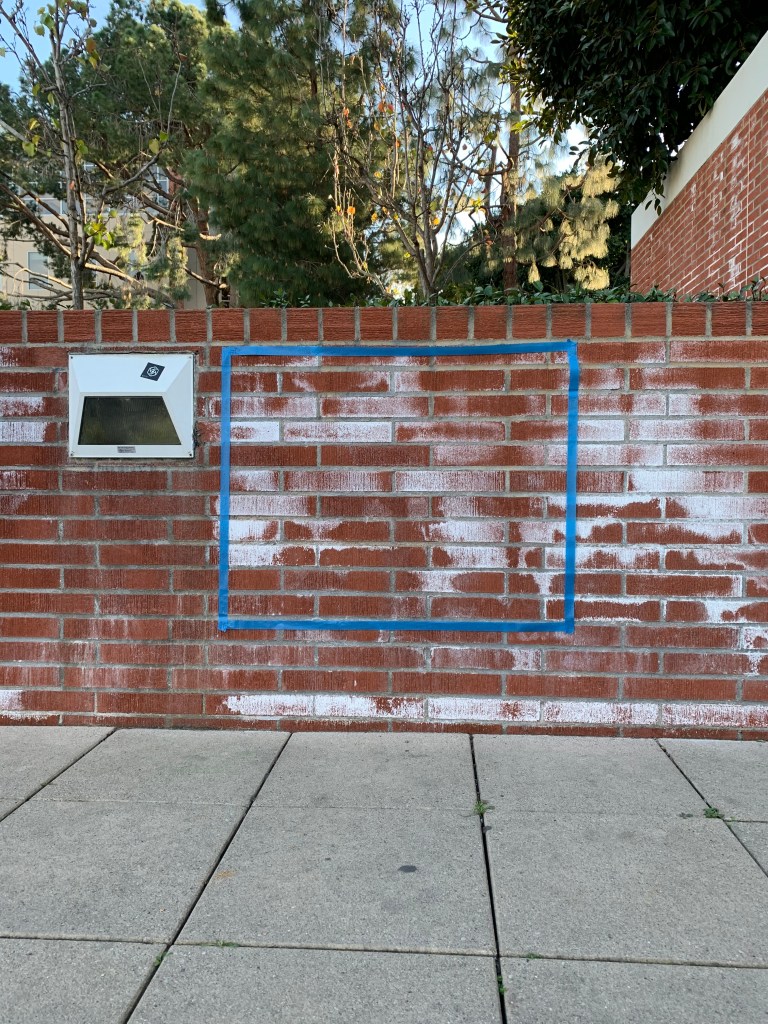
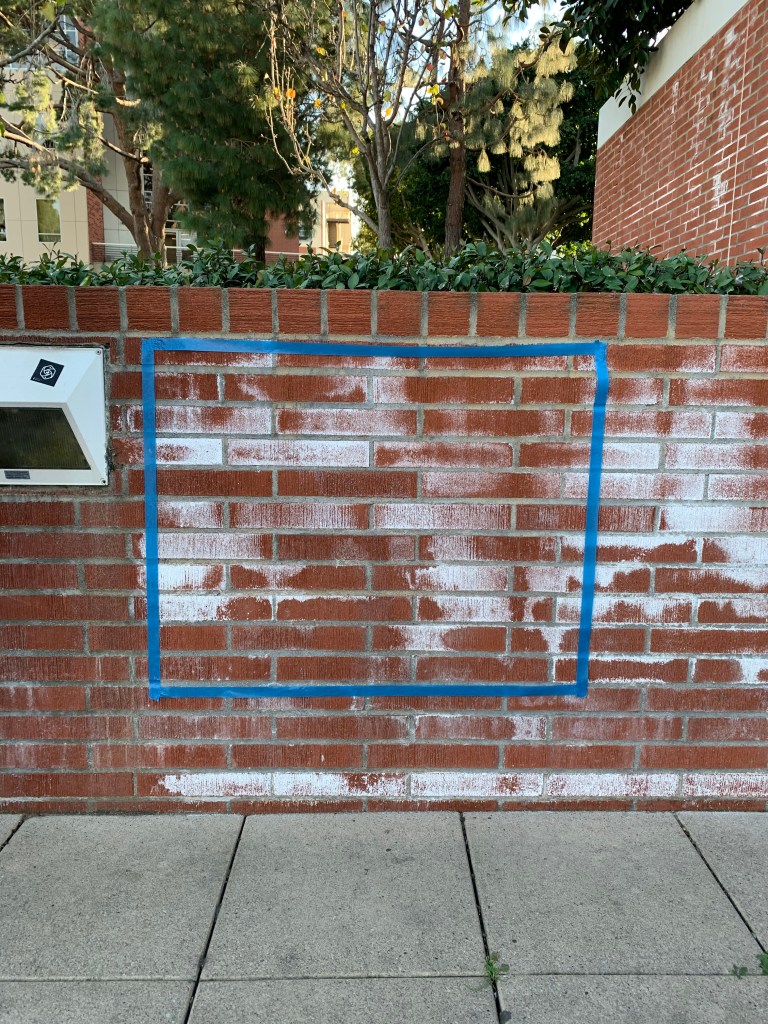
“We are just a bunch of bricks sitting on a wall”

Discuss the Form, Aesthetics & Content of your art.

Our choice of art focuses on the concept of human creation vs nature. The bricks shown are being worn down natural forces such as rain, wind, or other natural causes. It reflects how everything humanity has created (such as buildings or objects) are all just temporary. The bricks represent how humanity desires to be a permanent fixture on this planet, but the destructiveness nature holds over humanity reminds us that we are all just temporary.

Was your Art, Art before you put a rectangle around it? Why or why not?

I would say no it was not art. However, it was not the rectangle that made it art; what made it art was the meaning the group gave to the piece. Without meaning, the bricks continue to be just common bricks on a wall without sense of individual value/meaning.

Will your Art be Art after the rectangle is gone? Why or why not?

I believe that now that those bricks have been given meaning, and now that others have witnessed that meaning, those bricks will continue to be art. Despite the bricks not being meaningful to anyone outside the art class, every time I pass by those bricks I am reminded of the narrative behind them; whether or not the rectangle is there.

Does art reside in the body of the object? So that some objects are art and some objects are not art? Explain. How do we know which objects are art and which are not?

Art does not reside in the body of an object. Art is no longer just paint on a canvas, it can be a 3D sculpture made out of everyday objects or a piece of fruit taped to the wall. Any object CAN be art. If an object is presented in a meaningful and thoughtful way, then it can be classified as art.

Can art be something other than an object?

Yes, art can be something other than an object. Art is just a term that covers a vast number of “art forms.” One of those forms is dance. Dance is not an object but it can still be considered a form of art because of the emphasis on emotion and meaning embedded in each choreography.

Does art reside in the experience of the viewer? So that it isn’t an object per se, but a way and a choice of taking the time to have a viewing experience? Explain.

In a way, art does not just depend on the experience of the viewer. If it depended only on the viewer, then many pieces would not be considered art because people each have many different views and opinions. So, art resides with both the viewing experience and how the creator presents it. For example a chair is just a chair, until an artist comes along, splashes some paint and cool designs on it, and ultimately creates an experience for a viewer to explore.

Wk2: Abstract Art Activity—Finger Painting

  • What was the experience like?

It was a relieving experience because I was able to just sit around and enjoy painting without trying to accomplish a specific goal other than spreading paint onto a paper. There was no stress of following the standards of a certain style or following a pre-drawn sketch.

  • Was it easier, harder, or different than you expected?

It was a lot easier than I expected. I’m used to painting something specific rather than just painting nothing in particular, so I thought I would have a hard time trying to focus on not painting something specific. However, I found it a lot easier to just not think too much on what to paint and more on free expression.

  • How was the experience of making a painting with no subject? Confusing & Frustrating? Liberating & Inspiring?

I could say it was definitely more liberating, simply because I did not need to worry about drawing or painting a specific person or object. Unlike traditional painting, I did not need to feel pressure to get my idea onto a paper exactly how I envision it. It can be pretty frustrating to get every detail of painting just right, so painting freely was a different and liberating experience. 

  • How does this compare to other paintings you have seen?

In theory, all abstract paintings are different in at least one way because abstract it is just freedom of expression using paint or other artistic materials, and there are no set rules or set details to follow. So, compared to other paintings my abstract is different because it is random strokes of paint. Other abstract paintings may use similar colors or styles but because (again) since abstract does not follow any set details or any set style, each painting will be distinct. 

Wk1: Art Experience “Women’s Work” is also Art

“NOW” at CSULB

How did you feel performing Maintenance Art in the area around the USU?

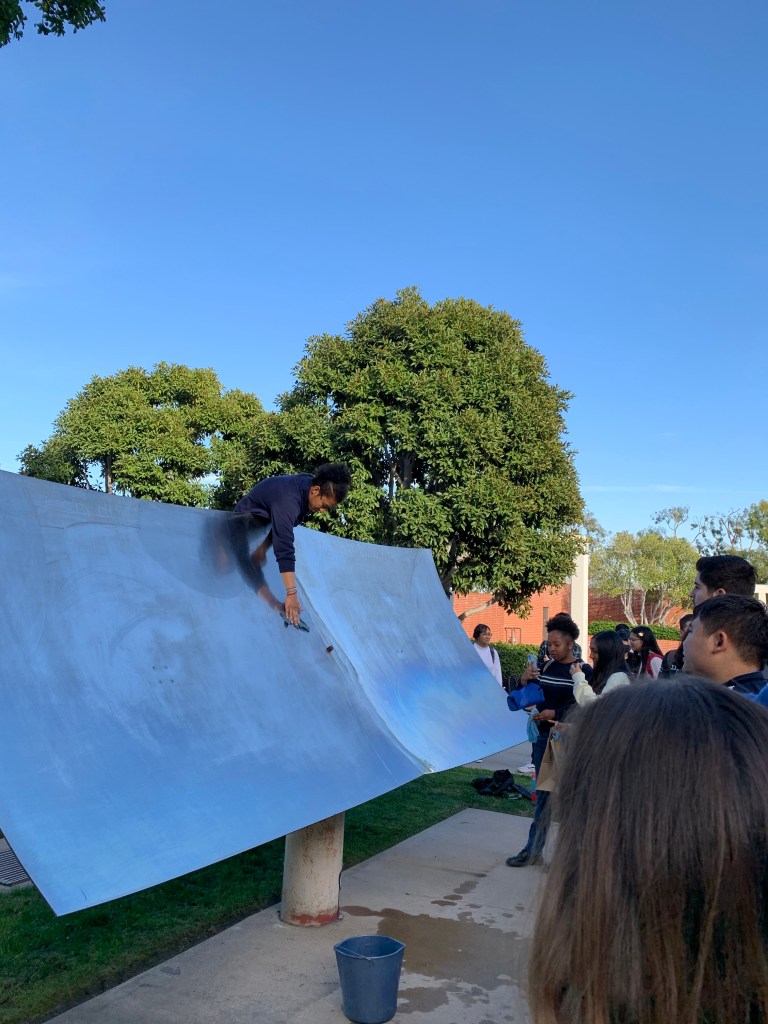
I will be honest and say it felt pretty awkward since there were other people wondering what the class was doing cleaning a sculpture. After a while though the whole class was cleaning so it felt more like a collective group project. The sculpture looked a lot better and shinier once the class was done cleaning.

How are Mierle Laderman Ukeles cleaning the steps of an art museum and Richard Serra flinging molten lead against the walls of an art museum different? How are they the same? Are one or both “art”? Are one or both “not art”? 

One difference between the art forms are in the way they are presented. In society, “women’s’ work” is considered to be more delicate and is labeled as “light work” while men’s’ work is based more on work that requires “strength.” Following these stereotypes, the art by both Ukeles and Serra can represent the differenced between “delicate work” and “hard work.” In Ukeles work, the cleaning of steps is what follows the delicate “women’s’ work” society believes in, while flinging molten lead is considered more dangerous; therefore, labeled as “men’s’ work.” 

I believe they are the same because they both represent art within physical labor. Both cleaning (washing the steps) and metal casting work (an example for molten lead) require physical labor no matter what stereotype society puts on them. 

I would consider both of them art because of the emotion and meaning behind their creation and presentations. Since the artist put effort into displaying his/her piece of work, it is important to acknowledge both pieces as a work of art.

Was Mierle Laderman Ukeles’ Maintenance Art performance at the Wadsworth Atheneum “art”? Did the fact that her performance was at an Art Museum make it art? What if instead, she had simply gotten hired as a janitor at a factory somewhere and performed that job for 6 months? Would that have been art? What makes an act “art” or “not art”?

Ukeles’ performance is art because she presented her display as art. Her performance was a statement and a display of emotions. Simply putting on a display at an art museum does not make it art, the location of a piece is not what defines the art. What defines the art is the emotional, and/or symbolical meaning put into a piece through the individual effort of the artist/artists. If Ukeles would have been hired as a janitor, it would not have been considered art unless she had displayed her job as a work of art. Again, I believe that art is defined by the emotions and connection put into a piece, which is why everyday common labor is not considered art, until the individual puts their own emotions and attachment into it; because, if every common thing was immediately labeled as art with no special emotion or connection from the artists, then art as a whole would be meaningless. 

Is an object or an action Art or Not Art because of some intrinsic property of the medium? Or because of the intention of the person performing it? Are all paintings on canvas art because paintings on canvas are exhibited in art museums? Is all house painting not art because we don’t exhibit painted houses in art museums? Can a painting on canvas ever be not art? Can painting a house ever be art? 

Art is not defined by where it is placed, art is still art whether it is displayed at an art museum or placed on a wall at home. I believe art is defined by the intention of the artist displaying or performing it. If we relied on the setting to define what is and what isn’t art, street art or individual art portfolios would be disregarded as not “real art” simply because they did not follow the stereotypical standard that art is exclusively paint on a canvas. Not all paintings or prints on canvas have to be art; however, canvas are the most widely known way to display art, which can be the most logical reason to why people most of the time do not use canvas for reasons other than art. 

I believe painting a house is not a form of art unless the painter/artist displays it as a work of art. He/She can say that they put a lot of effort and emotion into painting the house a certain way and therefore that makes it art. Again, just because certain art forms are not displayed in art museums does not make it “not art.” 

Prints/Paintings on canvas can be “not art” depending on the intentions of the person creating it. For example, for a concert I want to make a slogan banner on canvas paper; however, whatever I decide to paint or print on it, I will probably not consider art because my intentions were to give it another purpose. The same can be said about painting a house, as long as the person painting it has the intention to display the painted house as art, then it is those intentions that make it art.

Has Mierle Laderman Ukeles, or Jennifer Lopez, made you think differently about “Women’s Work”? Is “Women’s Work” ever art? If yes, when? If no, why not?

In a way my views did not change because I already believed that art can be found anywhere where an artist puts forth something as his/her own art. (Especially after that display with the banana taped to the wall) art depends on intentions or emotions put into a piece. Which is why some people consider their own jobs as a work of art because of all the effort and emotions they put into it. Likewise, “women’s work” can be art if the intentions of the artist is there.

In class we discussed the woman who cleaned Donald Trump’s Star on Hollywood Blvd. Whose Star would you get down on your hands and knees to clean?

I would clean a star that belongs so someone that I respect and admire. An artist that inspires me is the group BTS, and if I had to choose a star to clean it would be theirs. Unfortunately, they do not have a star yet.

Students cleaning the sculpture.

Design a site like this with WordPress.com
Get started